Should LinkedWearables be shut down?
by 0x5e5d9d1dfd87e9b8b069b8e5d708db92be5ade99 (paralax)
What are linked wearables?
Linked Wearables are a solution for integrating third-party NFTs as wearables in Decentraland. The implementation involved third-party creators applying to the DAO for registration, with approved entities added to a Third Party Registry on the Polygon network. These registered parties can then upload 3D assets for their NFTs. To enable wearables, third parties must build a resolver API mapping their NFTs to items with a standardized API endpoint for Decentraland clients. These third-party wearables differ from current Decentraland wearables in that publication fees vary based on collection size, and they cannot be independently traded in any marketplace. They serve as 3D representations of the source NFTs without having their own tradable tokens.
More details here: https://decentraland.org/governance/proposal/?id=14e76cc0-2bc7-11ec-ac84-77607720a240
What is the problem with them?
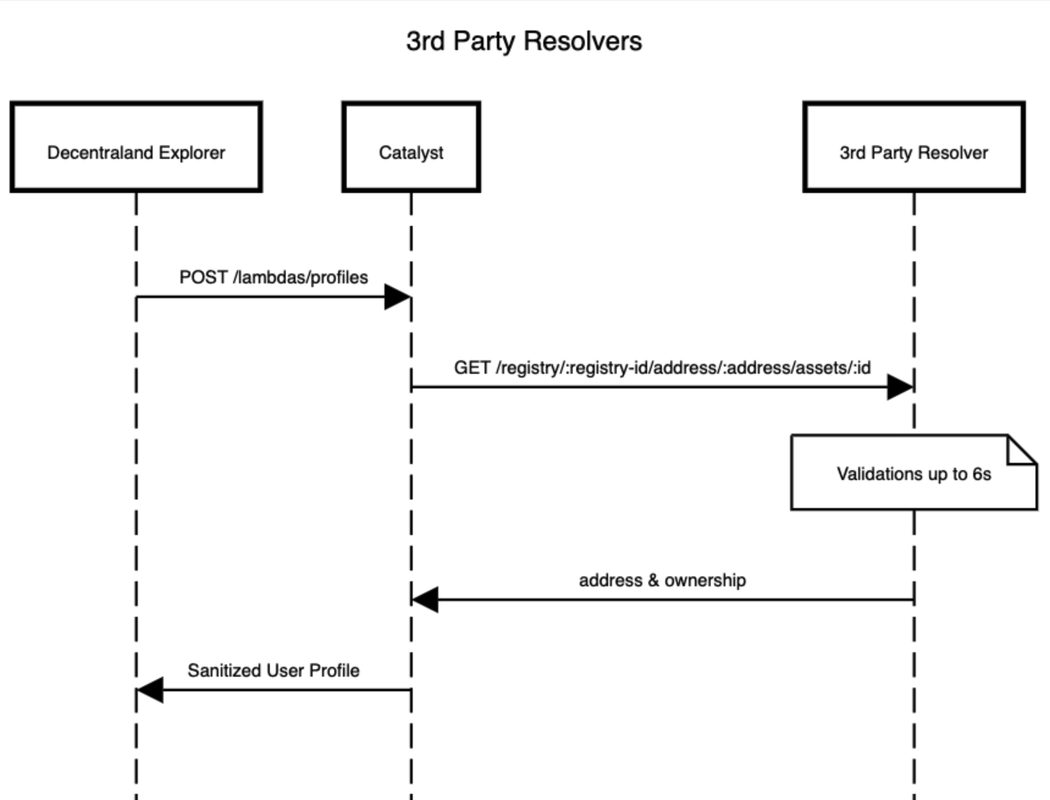
The concept of Linked Wearables is promising in expanding the scope of NFT functionality and utility. However, the current implementation raises significant concerns regarding the performance of the Decentraland client. The in-world experience with linked wearables mirrors that of any regular wearable usable in Decentraland. Users can view and equip them from their backpacks. The main difference lies in the validation process that happens behind, where a Catalyst node, instead of consulting the blockchain, verifies ownership of the asset by using the third-party resolver API.
When retrieving a profile from a Catalyst node, various validations are conducted to ensure that any equipped items in the profile genuinely belong to the associated wallet. In this architecture, the third-party API has a direct impact on the response time for resolving a Profile from a Catalyst node. As an example, Catalyst nodes offer an endpoint to request profile batches. If even one Profile in the batch has a linked wearable equipped, a slow third-party resolver API can significantly delay the entire batch response, leading to delays in rendering user profiles in the client.
What is the situation with the existing LinkedWearables providers?
Currently, there are 19 API resolvers, but 5 of them have been inactive for several months. In July 2023, this performance issue was communicated to the third-party providers, requesting them to adhere to a Service Level Agreement with a target response time of 500 milliseconds. Additionally, providers were requested to implement a new endpoint capable of processing validations in batches while maintaining compliance with the specified SLA.
Regrettably, the majority of providers failed to meet the SLA, and only a few implemented the newly requested endpoint with some of them responding with wrong validations.
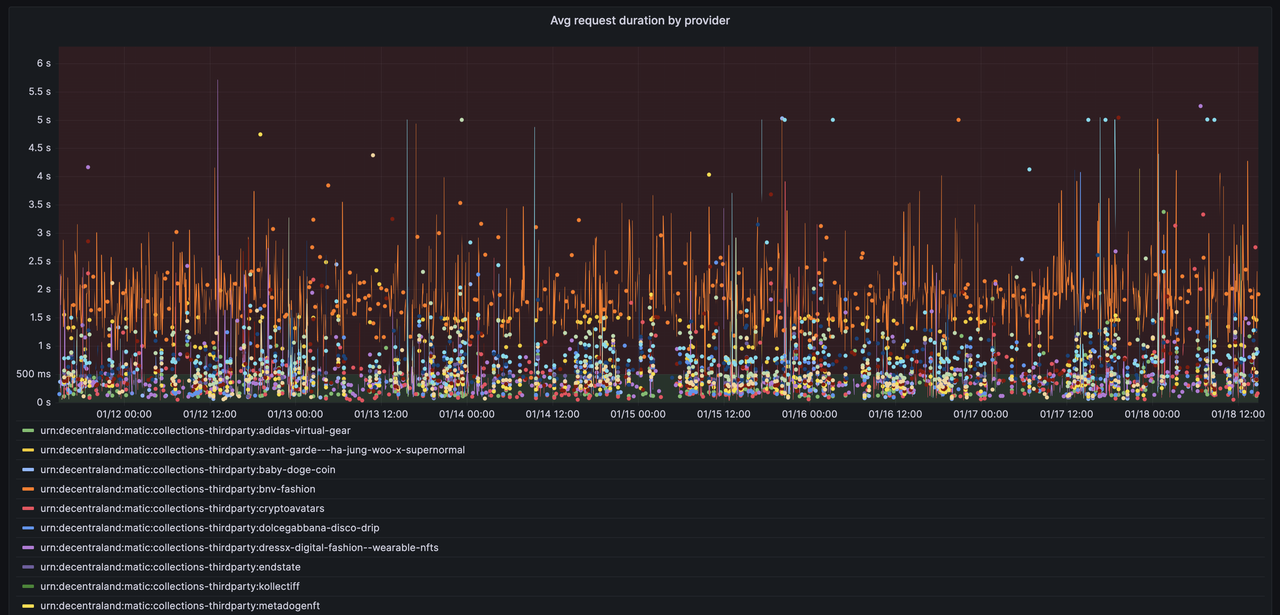
To illustrate this concern, refer to the chart below, showing the average response time recorded by Catalyst nodes for third-party resolver responses. Unfortunately, the majority fall outside the desirable green area, surpassing the 500-millisecond threshold. Notably, some responses even take between 4 to 6 seconds, highlighting the severity of the issue.
This poll aims to seek consensus on shutting down all resolver APIs to improve client performance. While the product holds significant potential for extending the utility of NFTs, the existing implementation has the potential to negatively impact all users, including those who don't possess any 3P items. The previous DAO poll didn't progress to the draft or governance stages. Hence, it can be revisited to re-formulate a more effective implementation strategy that ensures optimal client performance.
- yes
- no
- Invalid question/options
Off-Chain Vote
yes
554.82K VP7%
no
7.32M VP92.7%
Invalid question/options
19.58K VP0.2%
Timeline
Jan 18, 2024Proposal created
Jan 18, 2024Proposal vote started
Jan 23, 2024Proposal vote ended
Jan 26, 2024Proposal updated